Is It True That Mold in Your Basement, Crawl Space, or Attic Isn’t a “Big Deal?”
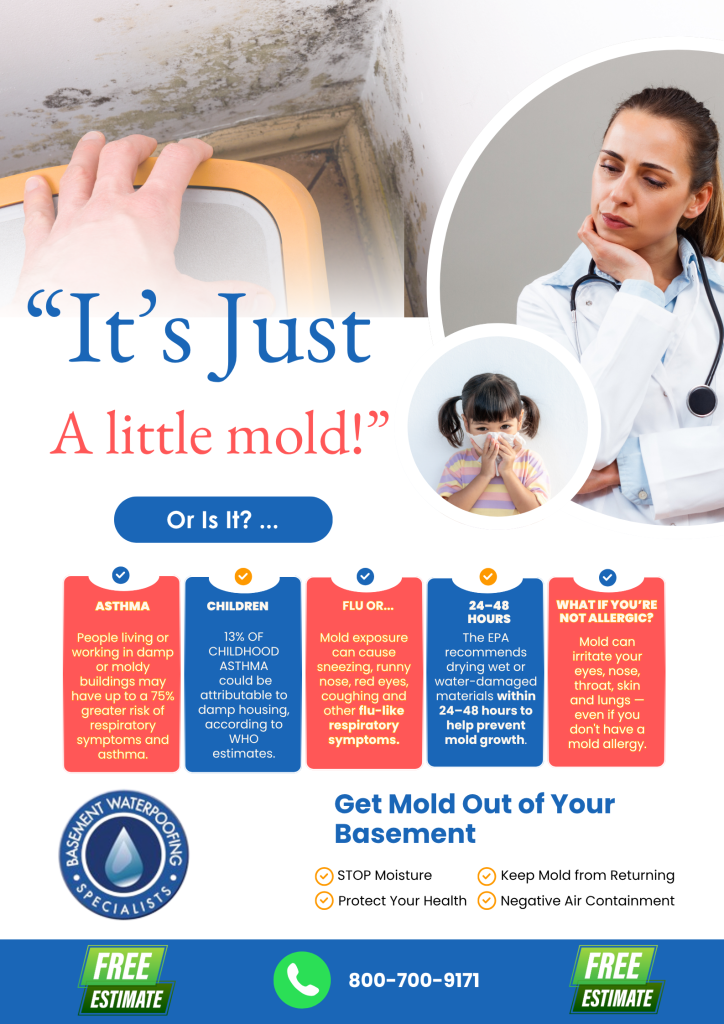
Finding mold in your basement, crawl space, or another area of your home can be alarming. But one of the biggest mistakes homeowners can make is treating mold as simply a cleaning problem.
Removing the visible mold is only part of the solution.
For long-term results, you also need to determine why the mold was able to grow in the first place, and correct the underlying moisture problem.
At Basement Waterproofing Specialists, that’s an important part of our approach to mold remediation. We don’t want to simply make an affected area look clean. We want to help correct the conditions contributing to the problem and reduce the likelihood of mold returning.
Why Does Mold Grow in Basements?
Mold needs moisture to grow, which is why basements and crawl spaces can be particularly vulnerable.
That moisture can come from several sources, including:
- Groundwater entering through basement walls or floors
- Foundation cracks
- Poor exterior drainage
- Plumbing leaks
- High indoor humidity
- Condensation
- Crawl-space moisture
- An inadequate or failing sump pump system
- Previous flooding or water damage
In many cases, what looks like a “mold problem” is actually a water or moisture problem with mold as one of the symptoms.
If the underlying source of moisture remains, simply cleaning or treating the visible mold may not provide a lasting solution.
Mold Can Affect Indoor Air Quality
Mold isn’t necessarily confined to the spot where you can see it.
Mold produces spores that can become airborne, and exposure to damp and moldy environments has been associated with respiratory and allergic symptoms.
The U.S. Environmental Protection Agency notes that mold exposure can cause symptoms including sneezing, runny nose, red eyes and skin irritation. Mold can also irritate the eyes, skin, nose, throat and lungs — even in people who aren’t allergic to mold.
That’s one reason professional remediation involves more than spraying a product onto a wall.
Why Negative-Air Containment Matters During Mold Remediation
One of the important steps we can use during professional mold remediation is negative-air containment.
When mold-contaminated materials are disturbed during the remediation process, spores and particles can potentially become airborne. You don’t want the process of removing mold from one area unnecessarily spreading contamination into other areas of the home.
A containment system helps isolate the work area.
Negative air pressure is then used to help control airflow so that air moves into the contained work area rather than outward into surrounding portions of the home.
It’s an important distinction between simply cleaning visible mold and performing a controlled remediation project.
The Goal Isn’t Just Mold Removal — It’s Moisture Control
Once the affected area has been addressed, the next question should be:
What caused the moisture?
This is where working with a company that specializes in both mold remediation and water-management solutions can make a significant difference.
Depending on what we find, correcting the source could involve:
Basement Waterproofing
If groundwater is entering through the basement, an appropriate waterproofing and drainage system can help manage the water before it continues creating damp conditions.
Interior or Exterior Drainage
Every property is different. In some cases, interior drainage is the appropriate solution. In others, exterior drainage may be needed to move water away from the home.
Sump Pump Systems
A properly designed sump pump and drainage system can play an important role in managing groundwater and keeping a basement dry.
Battery backup systems can also provide additional protection during power outages and severe weather.
Foundation Repair
Cracks and other foundation problems can sometimes provide pathways for water intrusion. When foundation problems are contributing to moisture issues, correcting the structural problem may be part of the long-term solution.
Crawl Space Waterproofing and Encapsulation
Crawl spaces can become major sources of moisture beneath a home. Waterproofing, drainage and encapsulation can help create a cleaner, drier environment and control moisture at its source.
Water Damage? The First 24–48 Hours Matter
If your basement has recently flooded or experienced a leak, acting quickly is important.
The EPA recommends drying wet or damp materials within 24–48 hours when possible to help prevent mold growth.
That’s why a flooded basement shouldn’t simply be left to “dry out on its own.”
Standing water needs to be removed, wet materials need to be addressed, and the source of the water should be identified.
Most importantly, you want to know why the water got into the basement and what can be done to prevent it from happening again.
Why Mold Problems Often Come Back
When homeowners tell us they’ve previously treated mold only to have it return, moisture is one of the first things to investigate.
Painting over the area doesn’t eliminate the source of moisture.
Spraying a mold product doesn’t stop groundwater.
Cleaning a wall doesn’t repair a foundation crack.
And replacing damaged materials without addressing continuing humidity or water intrusion can leave the conditions that contributed to the original problem unchanged.
Effective mold remediation therefore needs to look at the entire environment, not just the visible mold.
Don’t Just Clean Up the Mold. Fix What Caused It.
At Basement Waterproofing Specialists, our goal is to provide a more complete approach.
That means identifying affected areas, using appropriate containment and remediation procedures, and — when moisture intrusion is involved — determining what needs to be done to help keep the area dry.
Because the best mold-removal strategy isn’t simply making mold disappear today.
It’s correcting the conditions that allowed it to grow in the first place.
Basement Waterproofing Specialists provides professional mold remediation, basement waterproofing, drainage, sump pump installation, crawl-space solutions and foundation repair throughout Pennsylvania, New Jersey and Delaware.
If you’ve discovered mold, experienced basement flooding, or you’re dealing with persistent moisture or musty odors, contact us to schedule an inspection and free estimate.