What Homeowners Should Do After Basement & Yard Flooding
This Nor’Easter is rocking the NJ cost, inland, and towns throughout the entrie state.
Thankfully, eventually the rain will stop. The standing water begins to disappear. And it can feel like the worst is finally over.
Unfortunately, for homeowners dealing with flooding in Ocean County, Monmouth County, Middlesex County, and Hudson County, NJ, removing the visible water may only be the beginning.
Heavy rain and flooding can affect far more than the stuff in your basement. Water can saturate the soil surrounding your home, overwhelm existing drainage systems, damage your yard, enter through foundation cracks, and create the damp conditions that dangerous mold needs to grow.
That’s why it’s important to look at the entire property after a flooding event—not just the puddle on the basement floor.
Your Water Is Gone. Is the Problem?
This is one of the biggest misconceptions about basement flooding.
Once the water recedes, homeowners understandably begin cleaning up and getting life back to normal.
But where did that water come from?
If you don’t answer that question, there’s a good chance you’ll be dealing with the same problem during another major storm.
Basement flooding can be caused or worsened by:
- Poor yard drainage
- Saturated soil around the foundation
- Foundation cracks
- Hydrostatic pressure
- Failed or overwhelmed sump pumps
- Inadequate basement drainage
- Clogged or insufficient exterior drainage
- Water pooling near the foundation
A professional inspection can help identify why the water entered and what can be done to help prevent it from happening again.
Basement Flooding Can Cause More Damage Than You See
Standing water can obviously damage flooring, furniture, appliances, boxes, and other belongings.
The less obvious concern is what happens after the water is removed.
Water can soak into drywall, wood, insulation, flooring, and other porous building materials. Areas behind finished walls or underneath flooring may remain damp even when the basement appears dry.
Persistent moisture can lead to deterioration of building materials and create conditions that support mold growth.
That’s why drying and cleaning the basement is important—but so is identifying and correcting the source of the water.
Mold Is Another Concern After Basement Flooding
A wet basement provides many of the conditions mold needs to grow.
This can become especially problematic when water reaches drywall, wood, insulation, carpeting, or other porous materials.
You may notice:
- A persistent musty odor
- Dark or discolored areas on walls
- Mold or mildew on belongings
- Damp drywall or insulation
- Peeling or bubbling paint
- Excessive basement humidity
And remember: you don’t necessarily have to see mold to have a moisture problem.
If parts of the basement remain wet after flooding, those areas should be properly evaluated.
Don’t Forget About Your Yard
Basement flooding gets most of the attention after a major storm, but your yard can tell you a lot about what’s happening around your home.
When large amounts of rain fall faster than the ground can absorb them, water may begin pooling or flowing across the property.
Poor drainage can lead to:
- Large areas of standing water
- Soil erosion
- Damaged grass and landscaping
- Mud and washed-out areas
- Water collecting near the foundation
- Repeated flooding after heavy rain
And that last point is particularly important.
Your basement and yard aren’t separate water problems.
If your property isn’t moving stormwater away from the house effectively, that water can accumulate around the foundation and eventually find a way inside.
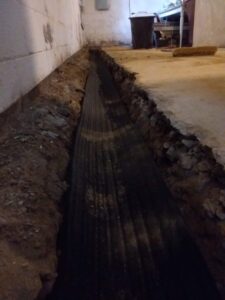
How Yard and French Drains Can Help
For properties with serious drainage problems, a properly designed yard drainage system can collect and redirect large volumes of water before it causes additional damage.
Depending on the property, solutions may include French drains, catch basins, underground drainage, grading improvements, or other systems designed specifically for the home’s drainage needs.
At Basement Waterproofing Specialists, we can install drainage systems capable of moving an enormous amount of water—including systems with the capacity to drain the equivalent of a full-size swimming pool in under 60 minutes.
For homes and properties that regularly experience standing water during severe storms, drainage capacity matters.
Check Your Sump Pump After a Major Storm
If your basement remained dry because your sump pump was working overtime, that’s good news.
But this is also a good time to make sure the system is ready for the next storm.
A sump pump failure can happen at exactly the wrong moment.
Homeowners should consider checking the condition of the pump, discharge system, and backup protection.
A battery backup can be especially valuable during severe weather because storms that produce heavy rainfall can also cause power outages.
Without electricity, a standard sump pump may stop working just as water around the foundation is reaching its highest level.
Foundation Cracks Shouldn’t Be Ignored
Flooding can also reveal vulnerabilities that were already present in a home’s foundation.
Small cracks that never seemed particularly important may suddenly begin leaking when the surrounding soil becomes saturated.
Homeowners should look for:
- New or expanding foundation cracks
- Water entering through existing cracks
- Damp areas along basement walls
- Water appearing where the wall meets the floor
- Bowing or movement in foundation walls
- Doors or windows suddenly sticking
Not every crack means there is a major structural problem. But if a crack is allowing water into your home—or appears to be changing—it should be inspected.
What Should You Do After Your Basement Floods?
First, remember that floodwater can create electrical, structural, and contamination hazards. If there is standing water near electrical equipment or you’re unsure whether the area is safe to enter, don’t take unnecessary risks.
Once immediate safety concerns have been addressed, the goal is to determine why the basement flooded in the first place.
That may mean evaluating the basement drainage system, sump pump, foundation, yard drainage, or a combination of several factors.
The solution for one home may be completely different from the solution for the house next door.
That’s why the inspection matters.
Helping Homeowners in Ocean, Monmouth, Middlesex & Hudson Counties
When widespread flooding hits New Jersey, homeowners don’t need someone showing up simply trying to sell them the biggest waterproofing system possible.
They need someone who can look at the property, identify the problem, and explain what actually needs to be fixed.
Basement Waterproofing Specialists is a local, family-owned, fourth-generation company serving homeowners throughout New Jersey, Pennsylvania, and Delaware.
Our services include:
- Basement flood and water removal
- Basement waterproofing
- French drains
- Yard drainage systems
- Sump pumps
- Battery backup systems
- Foundation repair
- Mold remediation
- Crawl space waterproofing and encapsulation
We’re currently helping homeowners throughout Ocean County, Monmouth County, Middlesex County, Hudson County, and surrounding New Jersey communities deal with basement and property water problems.
Don’t Just Clean Up the Water. Find Out Why It Happened.
If your basement or yard flooded during the recent storms, you don’t need to know whether you need a French drain, sump pump, foundation repair, mold remediation, or a completely different solution.
That’s our job.
We’ll inspect the property, look for the source of the water, and explain your options for getting the problem under control and helping protect your home against the next major storm.
Because after a flood, getting rid of the water is important.
Making sure it doesn’t come back is even better.
Contact Basement Waterproofing Specialists today to schedule your free inspection and estimate.
Local. Family-Owned. Fourth Generation.