Your home’s foundation is responsible for supporting the entire structure above it. But when something starts going wrong, the warning signs aren’t always obvious.
Sometimes it’s a small crack in a basement wall. Other times, it’s a door that suddenly won’t close properly, an uneven floor, or water seeping into the basement after heavy rain.
The good news? Many foundation problems can be repaired, especially when they’re identified early.
At Basement Waterproofing Specialists, we’ve helped homeowners throughout Pennsylvania, New Jersey, and Delaware identify and address foundation problems before they become more serious.
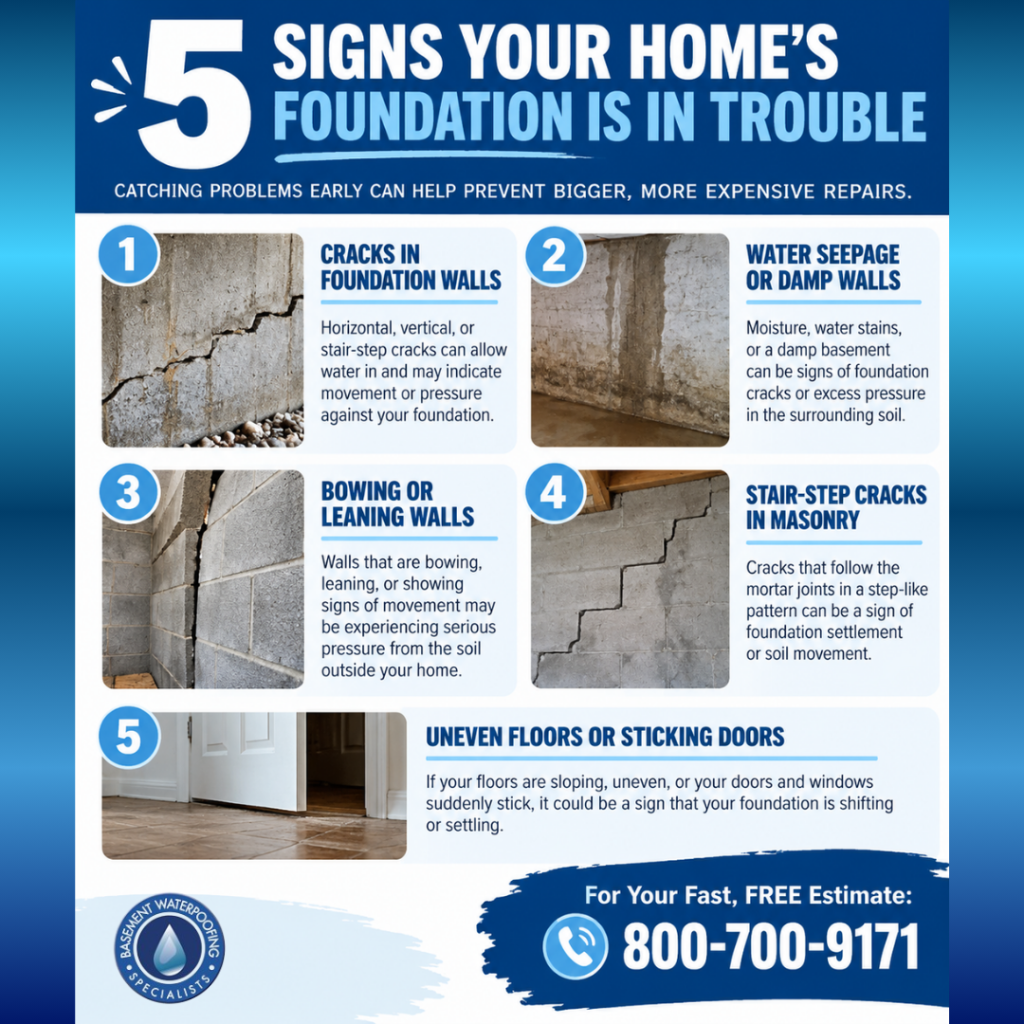
Here are five warning signs every homeowner should know.
1. Cracks in Your Foundation Walls
Not every foundation crack is a reason to panic. In fact, small hairline cracks can develop naturally as concrete cures or a home experiences minor settling.
However, certain cracks deserve closer attention.
Watch for:
- Horizontal cracks running across basement walls
- Diagonal cracks extending from corners
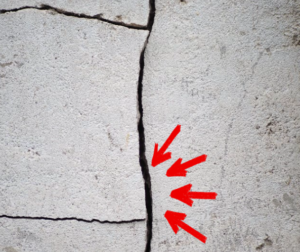
- Vertical cracks that continue widening
- Cracks accompanied by water seepage
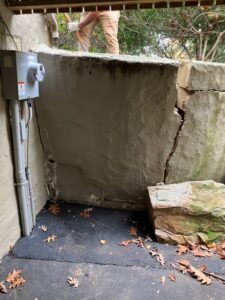
- Cracks where one side of the wall appears displaced
Horizontal cracks in particular can indicate pressure from the soil outside the foundation. Over time, that pressure may cause basement walls to bow or shift.
Cracks can also provide pathways for water to enter your basement, potentially leading to moisture damage and mold growth.
What should you do?
If a crack is growing, leaking, or accompanied by wall movement, schedule a professional foundation inspection. Even significant foundation cracks may be repairable, depending on their cause and the condition of the wall.
2. Water Seepage or Damp Basement Walls
Water in your basement isn’t always just a waterproofing problem.
Sometimes, it’s a warning sign that your foundation needs attention.
When heavy rain saturates the soil surrounding your home, water can accumulate against basement walls. This creates what’s known as hydrostatic pressure.
If there are cracks, gaps, or other vulnerable areas in the foundation, water may find its way inside.
Common warning signs include:
- Damp patches on basement walls
- Water entering where the wall meets the floor
- White, chalky deposits on masonry (efflorescence)
- Peeling or bubbling paint
- Musty odors
- Recurring puddles after heavy rain
Persistent moisture can also create conditions that encourage mold growth, damage building materials, and make the basement less usable.
What should you do?
Don’t simply paint over the damp area or clean up the water and assume the problem is solved.
A professional inspection can help determine whether the moisture is coming from foundation cracks, poor exterior drainage, an inadequate waterproofing system, or another source.
3. Bowing or Leaning Foundation Walls
Of the five warning signs on this list, bowing or leaning basement walls deserve particularly prompt attention.
A foundation wall should remain structurally stable under the loads and soil pressures it was designed to resist.
When excessive lateral pressure develops outside the wall, it may begin moving inward.
Possible contributing factors include:
- Saturated soil
- Poor drainage around the foundation
- Expansive soil
- Freeze-thaw cycles
- Inadequate structural support
You may notice the center of a basement wall beginning to curve inward, horizontal cracks developing, or separation appearing between sections of masonry.
Unlike a minor surface crack, a bowing wall can indicate a structural issue that requires professional evaluation.
What should you do?
Have the wall assessed promptly by a qualified foundation professional or structural engineer. Depending on the severity and cause, solutions may involve wall reinforcement, stabilization, drainage improvements, or more extensive repairs.
The sooner the problem is identified, the more repair options may be available.
4. Stair-Step Cracks in Brick or Block Walls
Have you ever noticed a crack that follows the mortar joints between bricks or concrete blocks, creating a staircase pattern?
These are called stair-step cracks, and they can be a warning sign of foundation movement.
They commonly appear in:
- Brick exterior walls
- Concrete block foundations
- Basement masonry walls
- Areas around windows and doors
Stair-step cracking may occur when different parts of a structure settle unevenly.
This is known as differential settlement.
Unlike uniform settling, differential settlement can place additional stress on walls and other structural components.
When should you be concerned?
Pay particular attention when cracks are widening, accompanied by displacement, or appearing alongside other signs of foundation movement.
A professional can help determine whether the cracking is cosmetic or related to an underlying structural problem.
5. Uneven Floors, Sticking Doors, or Windows That Won’t Close
Here’s one that surprises many homeowners.
Sometimes the first signs of foundation trouble appear nowhere near the basement.
Instead, you might notice:
- Doors that suddenly stick or won’t latch
- Windows becoming difficult to open
- Floors that slope or feel uneven
- Gaps appearing around door frames
- Cracks developing above windows or doorways
- Separation between walls and ceilings
These problems can have several causes, including normal building movement, humidity, framing issues, or foundation settlement.
But when multiple symptoms appear together—or continue getting worse—they may indicate that part of the home is shifting.
What should you do?
Don’t automatically assume a sticking door is a foundation problem. However, if it’s accompanied by new cracks, sloping floors, or other signs of movement, it’s worth having the structure evaluated.
Why Foundation Problems Often Get Worse After Heavy Rain
Homeowners throughout Pennsylvania, New Jersey, and Delaware know how much water a major storm can bring.
And all that water has to go somewhere.
When soil becomes saturated, drainage conditions around the foundation can change dramatically.
Poor grading, clogged gutters, inadequate downspout extensions, and ineffective yard drainage can allow additional water to accumulate near basement walls.
This may increase water pressure against the foundation and make existing cracks or leaks more noticeable.
That’s why foundation repair and basement waterproofing often go hand in hand.
Fixing a foundation crack may address one problem, but if excessive water continues accumulating around the home, the underlying moisture conditions may remain.
A comprehensive solution may involve both structural repairs and improved water management.
Can Serious Foundation Cracks Actually Be Repaired?
In many cases, yes.
Even large or concerning foundation cracks don’t automatically mean the foundation needs to be replaced.
The appropriate repair depends on several factors:
- The type and width of the crack
- Whether the wall has moved or shifted
- The underlying cause of the damage
- The condition of the surrounding foundation
- Whether water intrusion is also present
Some problems may be addressed through crack repair or waterproofing. Others may require structural stabilization or more extensive foundation work.
The important thing is determining why the damage occurred, not simply covering up the visible crack.
At Basement Waterproofing Specialists, our team evaluates foundation concerns alongside drainage and moisture conditions to help homeowners understand their repair options.
Why Choosing a Local Foundation Repair Company Matters
Foundation problems aren’t something most homeowners deal with every day.
And when you discover a major crack or a bowing basement wall, it’s natural to worry about the potential cost.
That’s why working with an experienced, local company matters.
Basement Waterproofing Specialists is a fourth-generation, family-owned and woman-owned company serving homeowners throughout Pennsylvania, New Jersey, and Delaware.
We understand the foundation and drainage challenges homeowners in our region face, from aging basement walls to heavy rainfall and persistent water intrusion.
Our services include:
- Foundation wall repair
- Structural foundation repair
- Basement waterproofing
- Foundation crack repair
- Interior drainage systems
- Sump pump installation
- French and yard drains
- Crawl space waterproofing
- Mold remediation
We also offer financing options to help homeowners address necessary repairs without putting them off indefinitely.
Don’t Ignore the Warning Signs
Foundation problems don’t always begin with dramatic damage.
Sometimes it’s a small crack that gets a little wider each year.
A basement wall that seems slightly damp.
A door that suddenly starts sticking.
Or a floor that doesn’t feel quite level anymore.
None of these symptoms automatically means your home has a serious structural problem. But they are worth investigating—particularly when several appear together.
The earlier you identify a foundation issue, the better your chances of addressing it before additional damage develops.